
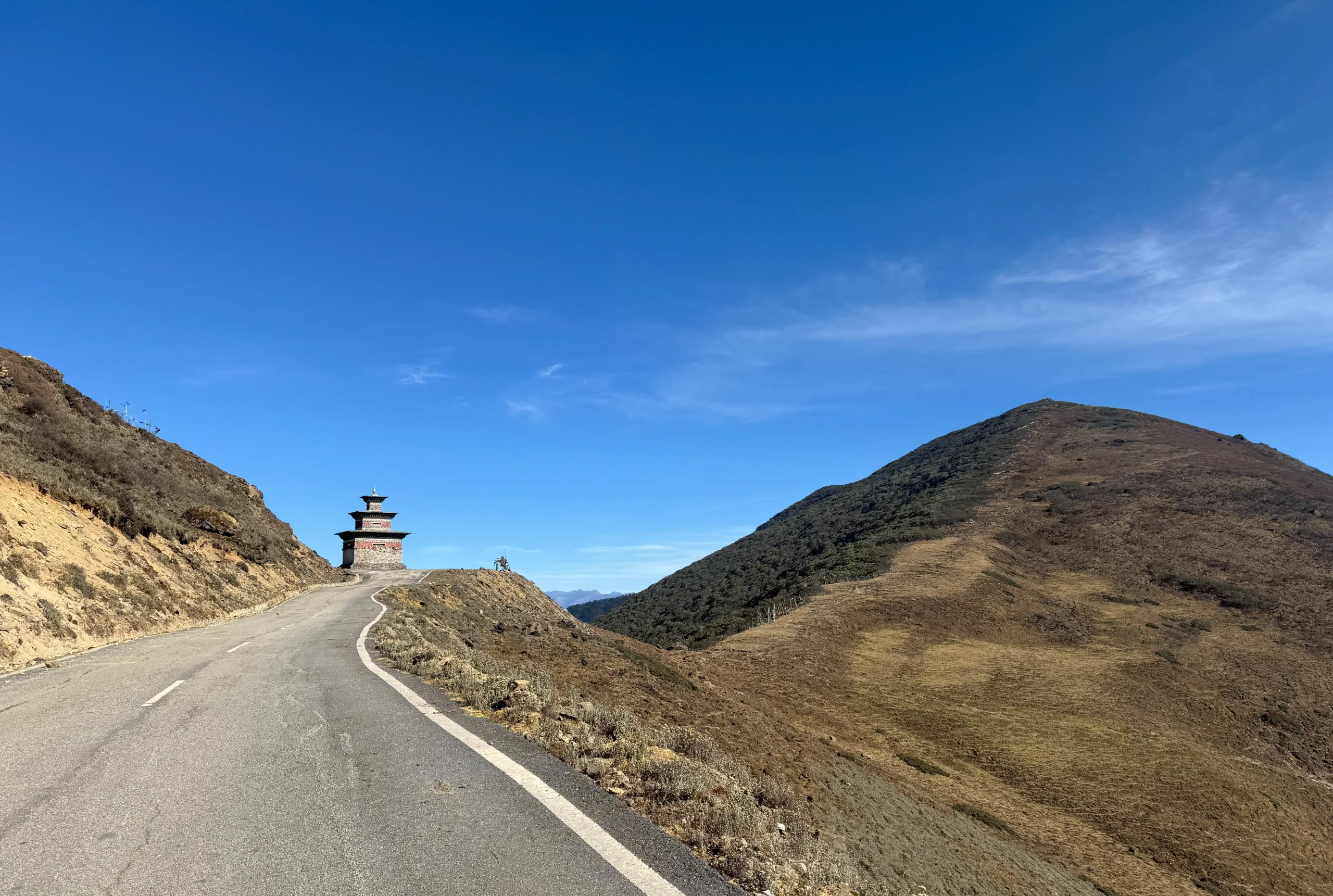
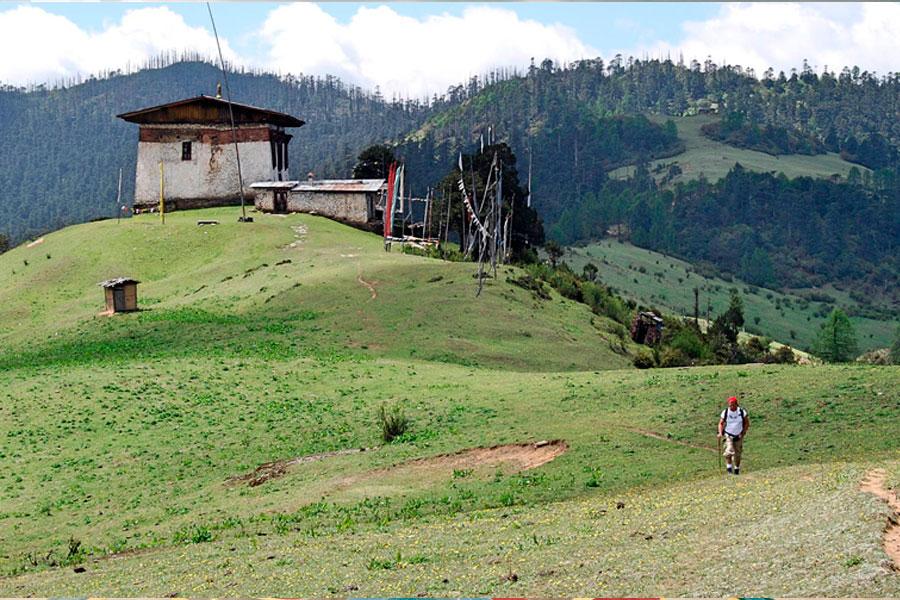
Bhutan is a nation of dramatic landscapes, ranging from lush, subtropical plains in the south to soaring, snow-capped Himalayan peaks in the north.
- Carbon Negative: Bhutan is the only carbon-negative country in the world, meaning it absorbs more carbon dioxide than it produces. This is a source of immense national pride and is enshrined in its constitution, which mandates that at least 60% of the country must remain under forest cover forever. Currently, it exceeds this, with over 70% of the nation covered in forest.
- Sacred Peaks: It is home to Gangkhar Puensum, which is widely considered the highest unclimbed mountain in the world. Mountaineering on peaks above 6,000 meters is banned out of respect for the spiritual belief that these mountains are the sacred homes of gods and spirits.
🧘 Gross National Happiness (GNH)
Perhaps Bhutan’s most famous concept is its pioneering development philosophy of Gross National Happiness (GNH).
First championed by the fourth King of Bhutan, Jigme Singye Wangchuck, in the 1970s, GNH is the nation’s guiding principle. It posits that true development should prioritize the spiritual, emotional, and cultural well-being of its people over simple economic growth (as measured by GDP).
The government’s policies are built around the four main pillars of GNH:
- Sustainable and equitable socio-economic development
- Preservation and promotion of culture
- Conservation of the environment
- Good governance
🏛️ Culture and Traditions
Bhutan’s culture is vibrant, largely homogenous, and deeply intertwined with Vajrayana Buddhism, which is the state religion and influences all aspects of daily life.
- Architecture: The country has a distinct and beautiful architectural style, seen in its monasteries, temples, and massive dzongs (fortress-monasteries that serve as regional administrative and religious centers). Traditional buildings are characterized by intricate woodwork and colorful motifs, constructed without the use of nails.
- National Dress: Bhutanese law requires all citizens to wear the national dress in government offices, schools, and on formal occasions. For men, this is the gho, a knee-length robe tied at the waist by a belt called a kera. For women, it is the kira, an ankle-length dress made of a large rectangular cloth, worn with a blouse (wonju) and a jacket (toego).
- Festivals (Tsechus): The most important cultural events are the annual religious festivals known as Tsechus. Held at dzongs and monasteries, these multi-day events bring communities together for colorful masked dances (cham) that depict religious stories and celebrate the teachings of Guru Rinpoche, the saint who introduced Buddhism to Bhutan.
- Archery: Archery is the national sport and is played with great passion and festivity throughout the country.
📜 Government and Economy
Bhutan transitioned from an absolute monarchy to a constitutional monarchy in 2008. The beloved King, Jigme Khesar Namgyel Wangchuck, is the Head of State, while political power is held by the democratically elected parliament and Prime Minister.
- Economy: The economy is primarily based on hydropower, agriculture, and tourism. Bhutan generates a significant amount of hydroelectricity, most of which it exports to India, its largest economic partner.
- “High Value, Low Impact” Tourism: Bhutan has intentionally avoided mass tourism to protect its culture and environment. It follows a “High Value, Low Impact” policy, which requires most visitors to pay a daily Sustainable Development Fee (SDF). This fee helps fund public services like free education and healthcare for its citizens.
💡 Other Unique Facts
- No Traffic Lights: The capital city, Thimphu, is one of the world’s only capital cities with no traffic lights. A police officer directs traffic from a booth at the main intersection.
- National Animal: The national animal is the Takin, a unique mammal that looks like a cross between a cow and a goat, which is associated with a popular local legend.
- Isolation: The country was largely isolated from the rest of the world until 1974, when it first opened its doors to a small number of foreign visitors. This isolation helped preserve its unique cultural identity.
Would you like to know more about a specific aspect of Bhutan, such as its festivals or its “Gross National Happiness” philosophy?
